


Quick Answer: SIP (Systematic Investment Plan) invests monthly in mutual funds with potential returns of 10–14% p.a., while FD (Fixed Deposit) offers guaranteed returns of 6.5–7.5% p.a. For long-term wealth creation with moderate risk, SIP wins. For capital protection and guaranteed income, FD is better. Your choice depends on goal, tenure, and risk appetite.
Yaar, ek situation socho — tumhare paas ₹5,000 extra hai har mahine. Kuch log kehte hain "FD mein daal do, safe rahega." Kuch kehte hain "Bhai SIP shuru karo, 10 saal mein maal banoge." Aur tum beech mein confuse baithe ho — kare toh kya kare?
Ye dilemma almost har Indian middle-class family ka hai. Hamare parents ne hamesha FD ko safe maana. But aaj ke zamane mein, jab inflation 5–6% pe chal rahi hai aur FD rates 7% ke aaspaas hain, kya FD really kafi hai?
Doosri taraf SIP hai — jo mutual fund mein thoda-thoda paisa dalta hai aur market ke utar-chadhaav ke saath kaam karta hai. Returns zyada hain, lekin risk bhi hai.
Is post mein hum dono options ko poori tarah se compare karenge — returns, tax, liquidity, risk, aur real numbers ke saath. Is post ke baad tumhe clearly pata chalega ki tumhare liye kaunsa better hai — SIP ya FD.
What is SIP (Systematic Investment Plan)?
A Systematic Investment Plan (SIP) is a method of investing a fixed amount regularly — weekly, monthly, or quarterly — into a mutual fund scheme. Instead of investing a lump sum, you invest small amounts over time, which reduces the impact of market volatility through a concept called Rupee Cost Averaging.
When markets are down, your fixed SIP amount buys more units. When markets are up, it buys fewer units. Over time, this averages out your cost of purchase, often leading to better long-term returns compared to lump sum investing at a single point in time.
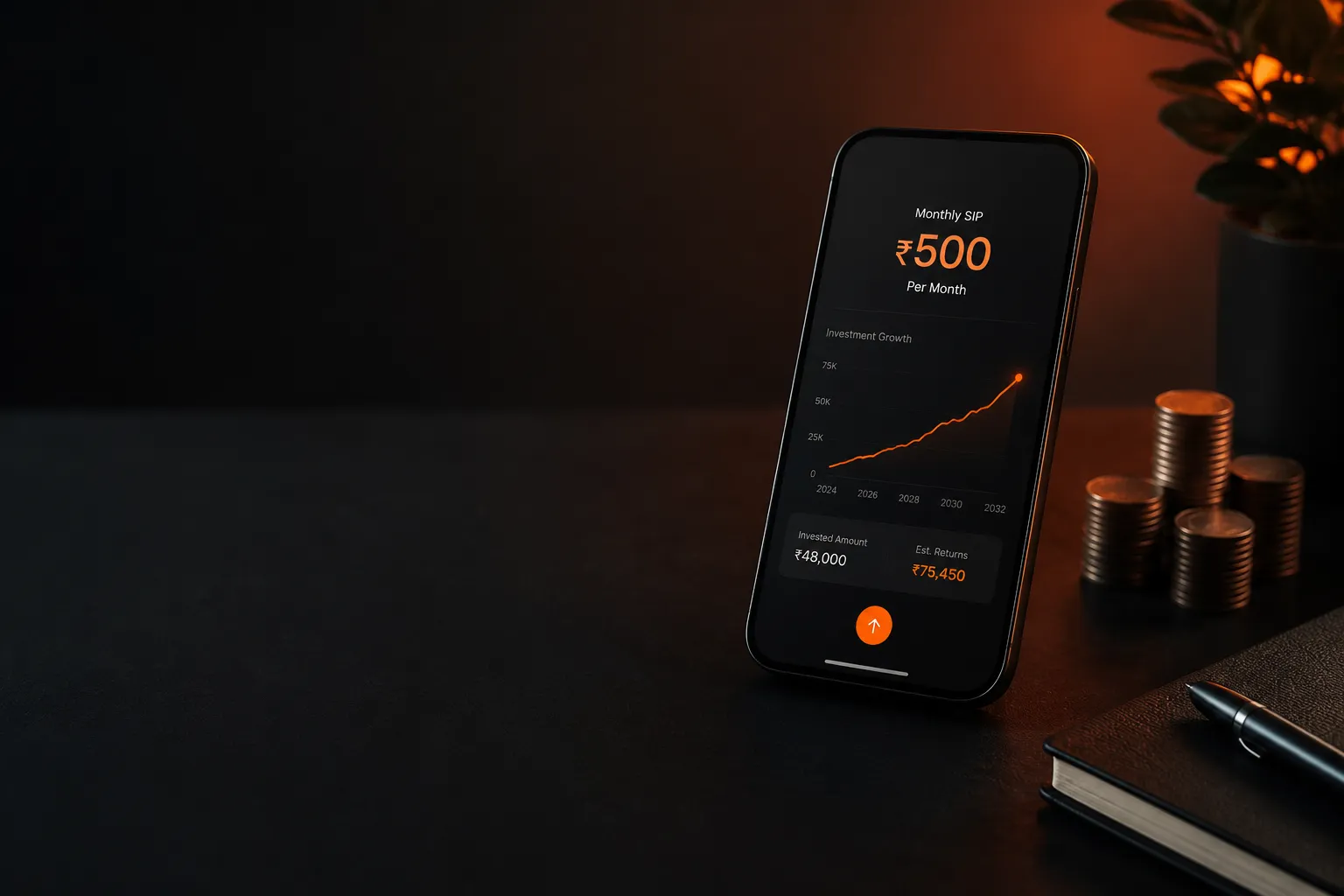
SIPs can be started with as little as ₹100–₹500 per month on platforms like Groww, Zerodha Coin, or Paytm Money. For long-term wealth creation (5+ years), equity mutual funds via SIP have historically delivered 10–14% CAGR in India.
- Minimum Investment: ₹100–₹500/month
- Tenure: Flexible — 1 year to lifetime
- Returns: Market-linked, not guaranteed (10–14% historical average for equity)
- Liquidity: Can be redeemed anytime (except ELSS which has 3-year lock-in)
- Tax: LTCG tax of 10% on gains above ₹1.25 lakh per year (equity funds)
What is FD (Fixed Deposit)?
A Fixed Deposit is one of India's oldest and most trusted investment instruments. You deposit a lump sum with a bank or NBFC for a fixed tenure at a pre-agreed interest rate. At maturity, you receive your principal plus interest — guaranteed, regardless of market conditions.
FDs are offered by all major banks (SBI, HDFC, ICICI), small finance banks (AU, Jana, Suryoday), NBFCs (Bajaj Finance), and post offices. As of 2026, major bank FDs offer 6.5–7.5% p.a., while small finance banks and NBFCs offer up to 8–9% p.a. Senior citizens typically get an additional 0.25–0.50% over regular rates.
- Minimum Investment: ₹1,000 (varies by bank)
- Tenure: 7 days to 10 years
- Returns: Fixed and guaranteed (6.5–8% depending on bank/tenure)
- Liquidity: Premature withdrawal allowed (with penalty of 0.5–1%)
- Tax: Interest fully taxable as per income tax slab; TDS deducted if interest exceeds ₹40,000/year
SIP vs FD — Head-to-Head Comparison
| Parameter | SIP (Equity Mutual Fund) | Fixed Deposit |
|---|---|---|
| Returns | 10–14% p.a. (historical) | 6.5–8% p.a. (guaranteed) |
| Risk | Medium to High | Very Low |
| Capital Protection | Not guaranteed | 100% guaranteed |
| Minimum Investment | ₹100–₹500/month | ₹1,000 lump sum |
| Liquidity | High (T+1 to T+3 redemption) | Moderate (penalty on early withdrawal) |
| Tax on Returns | LTCG 10% above ₹1.25L | As per income tax slab |
| Inflation Beating | Yes (usually) | Marginal (barely beats inflation) |
| Best For | Long-term wealth creation | Short-term safety, regular income |
| Lock-in | None (ELSS: 3 years) | Tax Saver FD: 5 years |
| DICGC Insurance | Not applicable | Up to ₹5 lakh per bank |
| Ideal Tenure | 5–20+ years | 1–5 years |
When to Choose SIP?
SIP is the right choice when your investment horizon is 5 years or more and you are comfortable with short-term market fluctuations in exchange for higher long-term returns.
You are young (20s–40s)
Time is your biggest asset. A 25-year-old investing ₹5,000/month in SIP for 30 years at 12% CAGR builds a corpus of over ₹1.75 crore. The same amount in FD at 7% gives roughly ₹60 lakh.
You want to beat inflation
India's average inflation is 5–6%. FD at 7% gives only 1–2% real return. Equity SIP at 12% gives a 6–7% real return — your money actually grows in purchasing power.
You want to build long-term wealth
Goals like retirement, child's higher education, or buying a house in 10–15 years are best funded through SIP.
You want to automate savings discipline
SIP's auto-debit feature ensures discipline even for salaried people who tend to spend whatever is in their account.
When to Choose FD?
FD is the right choice when capital safety is non-negotiable or your time horizon is short.
Emergency fund
Keep 3–6 months' expenses in an FD or liquid fund. Never put emergency funds in equity SIP — markets may be down exactly when you need money.
Short-term goals (1–3 years)
Saving for a vacation, down payment, or appliance purchase? FD gives guaranteed returns without volatility risk.
Senior citizens
Retired individuals who need regular income and cannot afford capital erosion in a market crash should prefer FD — especially Senior Citizen FDs at 7.5–8%.
Risk-averse investors
If seeing your portfolio go down 20% during a market crash gives you sleepless nights, FD is psychologically better for you — at least until you build financial confidence.
Low tax bracket
If you are in the 0% or 5% tax bracket, FD's post-tax return (6–7%) is quite attractive compared to the additional complexity of equity SIP.
Real Numbers: SIP vs FD Side by Side
Example 1 — Rahul (28 years, ₹5,000/month, 20-year horizon)
Monthly: ₹5,000 | Duration: 20 years
Total Invested: ₹12,00,000
Estimated Corpus: ₹49,95,736
Net (after ~₹3–4L LTCG tax): ~₹46–47 lakh
Monthly: ₹5,000 | Duration: 20 years
Total Invested: ₹12,00,000
Estimated Corpus: ~₹26,00,000
Net (after 30% slab tax): ~₹20–22 lakh
Winner: SIP gives nearly 2x more wealth over 20 years.
Example 2 — Sunita (58 years, ₹5 lakh lump sum, 3-year goal)
Investment: ₹5,00,000 | Duration: 3 years
Expected Return: 12% (but can be -10% to +30%)
Risk: HIGH — not suitable for 3-year goal
Investment: ₹5,00,000 | Rate: 7.75% | 3 years
Maturity Value: ~₹6,26,000
Predictable, safe, guaranteed
Winner: FD wins for short-term, low-risk requirement.
Pro Tips
1. SIP aur FD dono saath rakh sakte ho — ye "vs" nahi, "and" bhi ho sakta hai!
Apna emergency fund FD mein rakho aur long-term wealth ke liye SIP karo. Dono ki apni jagah hai ek smart portfolio mein.
2. SIP mein market crash se darao mat — actually ye tumhara dost hai.
Jab market gira hua hota hai, tumhara SIP zyada units khareedta hai. Ye hi toh Rupee Cost Averaging ka magic hai. Crash ke time SIP band karna sabse badi galati hai.
3. FD ke liye sirf bade banks mat dekho — small finance banks check karo.
AU Small Finance Bank, Jana Bank, Suryoday Bank jaise banks 8–9% FD rates dete hain in 2026. DICGC ke under ₹5 lakh tak insured hain — toh ye safe bhi hain.
4. SIP start karne ke liye "sahi time" ka wait mat karo.
Koi nahi jaanta market kab upar jayega ya neeche. Jitna jaldi shuru karo utna better. Ek saal delay karna 20 saal ke horizon mein lakhs ka fark daalta hai.
5. Tax planning mein SIP zyada efficient hai FD se.
FD ka poora interest taxable hai tumhare slab ke hisaab se. Equity SIP mein LTCG ₹1.25 lakh tak tax-free hai. 30% bracket mein ho toh ye difference bahut bada ho jaata hai.
Common Mistakes to Avoid
1. Emergency fund ko SIP mein daalna
Ye bahut common galati hai — especially young investors mein. Agar kal job gayi ya medical emergency aayi, tum SIP redeem karoge — but market neeche hoga toh loss mein bechna padega. Emergency fund hamesha liquid ya FD mein rakho.
2. FD ko "invest" samajhna
FD savings ka ek tool hai, investment nahi. Agar inflation 5.5% hai aur FD 7% de raha hai, tumhara real return sirf 1.5% hai. Aur 30% tax slab mein toh real return negative bhi ho sakta hai. Sirf FD pe rely karke tum financially pichad jaoge.
3. SIP ek baar shuru karke bhool jaana aur review nahi karna
Kai log SIP start karte hain aur kabhi check nahi karte. Har saal ek baar review karo — kya fund accha perform kar raha hai? Kya tumhari goal change hui? Portfolio rebalancing zaroori hai.
4. Chhote tenure mein equity SIP karna
Agar 1–2 saal baad paise chahiye (shaadi, car, etc.), tab equity SIP mat karo. Market kabhi bhi neeche ho sakta hai. Short tenure ke liye debt funds ya FD better hain.
5. FD tod ke penalty se darna aur galat jagah paisa fansa lena
Kai log FD mein paisa daalta hain aur zaroori kaam ke liye tod nahi paate — penalty ke darr se. FD tod ke penalty 0.5–1% hoti hai, jo usually buri nahi hoti. Zaroori kaam ke liye FD zaroor todo.
Key Takeaways
- SIP long-term wealth ke liye better hai — 10+ saal ke goals ke liye equity SIP historically 12–14% CAGR deta hai, jo FD se almost double hai.
- FD capital safety aur short-term goals ke liye better hai — 1–3 saal ke goals, emergency fund, aur senior citizens ke liye FD ideal hai.
- Dono saath chal sakte hain — Smart investor dono use karta hai: FD for safety, SIP for growth.
- Tax efficiency mein SIP wins — ₹1.25 lakh LTCG tax-free, aur ELSS se 80C benefit bhi milta hai. FD ka poora interest taxable hai.
- Inflation ko dhyan mein rakho — Sirf FD pe depend karna long-term mein purchasing power destroy kar deta hai.
See the Numbers for Yourself
Yaar, numbers sunna alag baat hai, lekin apne khud ke paison ka calculation dekhna — woh game-changer hota hai! Faydemand.in pe ja aur apna personalized comparison karo:
SIP Calculator pe try karo — ₹5,000/month, 15 saal, 12% — dekho kya corpus banega. Phir FD Calculator pe same amount try karo aur fark apni aankhon se dekho. Ye free tools hain, koi signup nahi, koi spam nahi.
Agar tax saving ke saath investment karna hai, toh ELSS Calculator bhi zaroor check karo. Aur agar already SIP chal raha hai toh Step-Up SIP Calculator dekho — har saal thodi si increase kitna farak daalta hai!