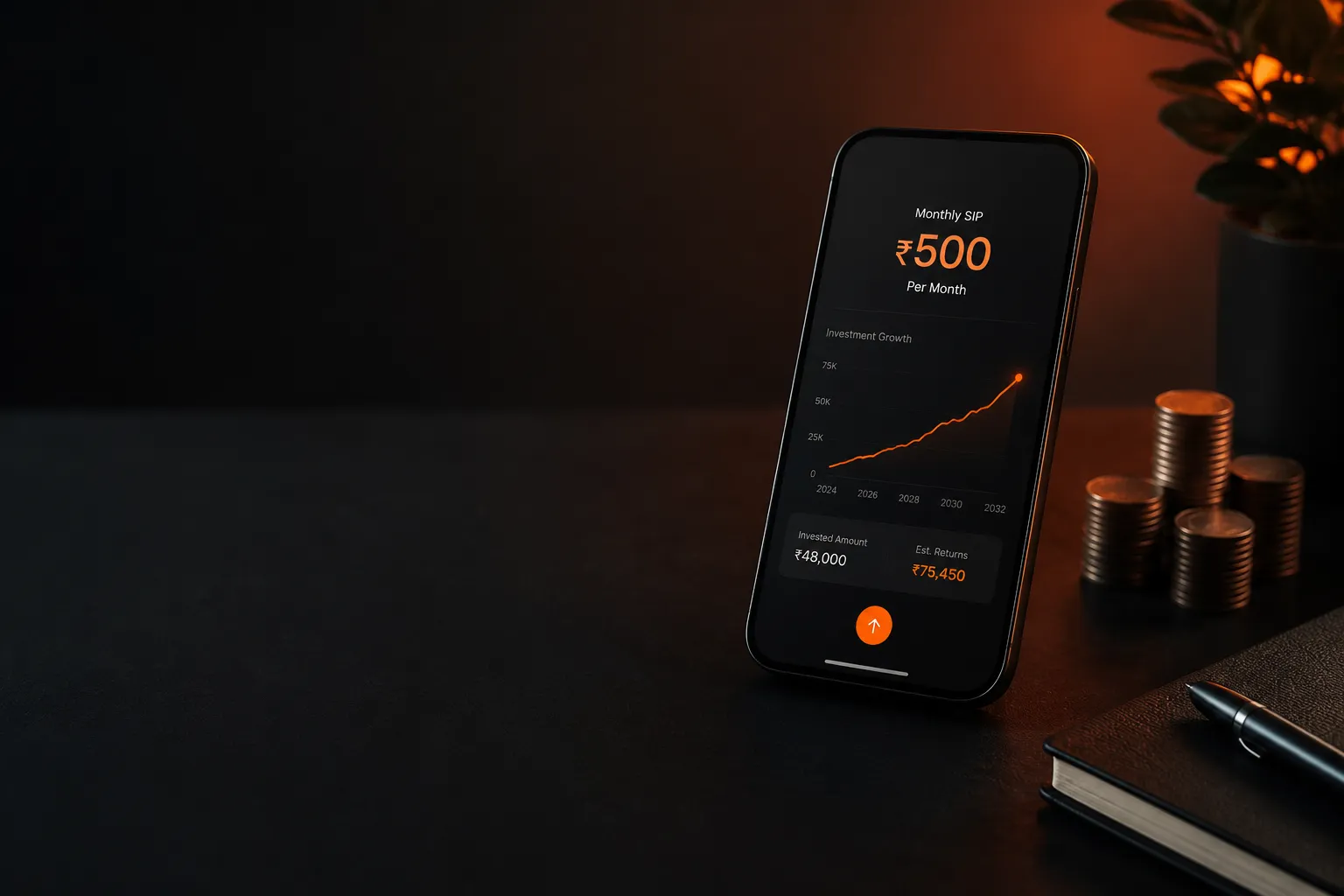



Quick Answer: SIP invests fixed amounts monthly, averaging purchase cost over time — ideal for salaried investors with regular income and 5+ year horizons. Lumpsum puts a large amount in at once — better when markets are at a low or you have a windfall. SIP reduces risk through rupee cost averaging while lumpsum can generate higher returns in rising markets. Choose based on your income type, market conditions, and risk tolerance.
Socho ek situation — tumhare paas ₹2 lakh aaye hain suddenly. Koi bonus mila, ya ghar se kuch paisa aaya, ya freelance project ka payment aaya. Ab tum soch rahe ho — ek baar mein poore ₹2 lakh lagaun, ya ₹2,000 se SIP shuru karun?
Ye question zyada common hai jitna tum sochte ho. Har kisi ke life mein kuch moments aate hain jab ek bada amount haath mein hota hai — bonus, inheritance, property sale, insurance maturity, ya phir FD mature hone pe mila paisa. Aur wahi confusion shuru hoti hai.
Sach ye hai — dono ke apne faayde hain, dono ke apne use cases hain. Koi ek universally "better" nahi hai. Ye depend karta hai: tumhare paas kitna paisa hai aur kahan se aaya, market abhi kahan chal raha hai, tumhara goal kya hai, aur tumhara risk tolerance kya hai. Is post mein hum clear decision framework ke saath explain karenge ki tumhare liye aaj, is waqt, kaunsa option better hai.
What is Lumpsum Investment?
A lumpsum investment means investing a large amount all at once into a mutual fund at the current NAV. Your entire capital is exposed to market movements immediately from Day 1.
- Timing matters enormously — investing at a market peak hurts; investing at a market low is highly rewarding
- Full capital deployed immediately — all your money starts compounding from Day 1
- Higher potential returns in bull markets — entire corpus benefits from market rise
- Higher risk in volatile markets — entire corpus suffers in market falls
- Best suited for: Windfalls, bonuses, maturity proceeds, or when markets are clearly undervalued
When lumpsum works brilliantly: ₹5 lakh invested in March 2020 during COVID crash (Nifty at 7,500) became approximately ₹12 lakh by December 2021 when Nifty crossed 18,000. That's the power of lumpsum at the right time.
When lumpsum hurts: ₹5 lakh invested in January 2008 (Sensex at 21,000) fell to ~₹2 lakh by March 2009 (Sensex at 8,000). It took 4 years to recover. That's the risk of lumpsum at the wrong time.
What is SIP (Systematic Investment Plan)?
SIP invests a fixed, predetermined amount into a mutual fund at regular intervals — typically monthly. The key mechanism is Rupee Cost Averaging (RCA): when markets are high, your fixed amount buys fewer units; when markets are low, it buys more. Over time, this averages out to a lower overall cost per unit.
- Timing becomes irrelevant — you invest regardless of market level, averaging out highs and lows
- Discipline and automation — auto-debit ensures consistent investing without emotional interference
- Lower risk in volatile markets — downturns are buying opportunities, not disasters
- Best suited for: Salaried income, regular savings, beginners, risk-averse investors
The psychological advantage: When markets crash, SIP investors benefit — monthly installment buys more units at lower prices. This removes the fear and greed cycle that destroys most individual investors' returns.
Lumpsum vs SIP — Head-to-Head Comparison
| Parameter | Lumpsum | SIP |
|---|---|---|
| Investment Style | One-time, large amount | Regular, fixed amount monthly |
| Market Timing Risk | Very High | Very Low |
| Rupee Cost Averaging | No benefit | Core benefit |
| Returns in Bull Market | Higher (full corpus exposed) | Slightly lower (gradual deployment) |
| Returns in Bear Market | Lower (full corpus suffers) | Higher (buying more at low prices) |
| Ideal for | Windfalls, bonuses | Regular income, salaried investors |
| Emotional Discipline | Harder (timing pressure) | Easier (automated) |
| Best Market Condition | Bear market / market low | Any market condition |
| Risk Level | Higher (concentration risk) | Lower (spread over time) |
When to Choose Lumpsum?
1. You have a windfall or one-time large amount
Bonus, inheritance, property sale proceeds, FD maturity — these are natural lumpsum situations. You cannot "SIP" a bonus; it comes all at once and must be deployed strategically.
2. Markets are at a significant low
If Nifty/Sensex is trading at historically low PE ratios (below 15–16x) or has corrected 20–30% from peak, lumpsum investing is highly rewarding. The challenge: fear is highest exactly when lumpsum is most beneficial.
3. Debt funds and liquid funds
For debt mutual funds — liquid, ultra-short duration, money market — lumpsum is always the preferred mode. Very low volatility means rupee cost averaging adds no meaningful benefit.
4. Short-to-medium horizon with lumpsum available
₹10 lakh available and need it to grow in 3–5 years? Waiting to deploy it slowly via SIP means idle money. Invest in appropriate funds (debt or hybrid) via lumpsum based on your horizon.
When to Choose SIP?
1. You have regular monthly income
Salaried professional with monthly income — SIP is the natural fit. It aligns your investment with your income cycle and ensures discipline without requiring market timing.
2. You are a beginner investor
New investors should almost always start with SIP. It removes the biggest pitfall — trying to time the market. Beginners often buy high (during excitement) and sell low (during panic) — SIP eliminates both tendencies.
3. Markets are at high valuations
Nifty at 22–24x PE ratio or near all-time highs? Committing a large lumpsum carries significant timing risk. SIP at such times averages your entry, protecting you if markets correct.
4. Long-term goals (5+ years)
Retirement (20–30 years), children's education (10–15 years) — for any long-term objective, SIP is ideal. Compounding of regular investing over long periods creates tremendous wealth.
The STP Strategy: Best of Both Worlds
Have a large lumpsum but markets seem expensive? Systematic Transfer Plan (STP) is the ideal solution.
- Invest your entire lumpsum (say ₹10 lakh) into a Liquid Fund or Ultra-Short Duration Fund — earns 6–7% safely
- Set up automatic transfer of a fixed amount (say ₹1 lakh/month) from the liquid fund to your chosen Equity Fund
- Over 10 months, ₹10 lakh gradually moves from liquid to equity — with full rupee cost averaging benefits
Benefits: Idle money earns liquid fund returns (not sitting at zero-interest in savings account), equity exposure builds gradually, completely automated, and psychologically comfortable — no single high-stakes decision.
Use the STP Calculator at faydemand.in to plan exactly how your STP will work — monthly transfer amount, liquid fund balance, and final equity corpus.
Real Numbers: Side-by-Side Comparison
Example 1 — Vikas, 32 years, ₹6 lakh bonus, 10-year horizon
12% CAGR | 10 years
Corpus: ~₹18.6L
12% CAGR | 10 years
Corpus: ~₹11.6L
Liquid 6.5% → Equity 12%
Corpus: ~₹15.8L
Lumpsum wins if timing is right. SIP gives lower absolute returns but far lower stress. STP gives the middle ground — better than SIP, safer than pure lumpsum.
Example 2 — Kavya, 27 years, ₹3,000/month savings, 20-year horizon
Kavya doesn't have a large amount — she saves ₹3,000/month from her salary.
- Monthly SIP: ₹3,000 | Duration: 20 years | CAGR: 12%
- Total Invested: ₹7,20,000
- Estimated Corpus: ~₹29,97,000 (~₹30 lakh)
- Wealth Created: ₹22,77,000 — on just ₹7.2 lakh invested!
For Kavya, lumpsum is not even an option — SIP is the only sensible strategy. 20 years of disciplined ₹3,000/month SIP creates ₹30 lakh from ₹7.2 lakh — compounding at its finest.
Historical Nifty 50: Lumpsum vs SIP Returns
| Period | Lumpsum CAGR | SIP XIRR | Winner |
|---|---|---|---|
| 2003–2008 (Bull Run) | 45% | 38% | Lumpsum |
| 2008–2013 (Post-Crash) | 4% | 14% | SIP |
| 2013–2018 (Steady Growth) | 11% | 12% | SIP (slight edge) |
| 2018–2023 (Mixed Market) | 13% | 15% | SIP |
| 2020 COVID Crash Entry | 28% (3-yr CAGR) | 22% (3-yr XIRR) | Lumpsum |
Pattern: SIP consistently outperforms or matches lumpsum in volatile/uncertain markets. Lumpsum wins only when timing is perfect — investing at market lows or early in a bull run.
Pro Tips
1. Bonus ya windfall aaye toh turant invest mat karo — 24 ghante socho.
Jab bhi bada paisa haath mein aata hai, emotions high hote hain. Ek raat soo jao. Kal subah sochna ki kya ye meri strategy ke saath aligned hai — phir invest karo. Impulsive lumpsum decisions bahut costly ho sakte hain.
2. Lumpsum ke liye Nifty PE ratio check karo pehle.
NSE website pe current PE ratio dekho. PE 20+ hai toh lumpsum risky hai — STP use karo. PE 16–18 range mein hai toh lumpsum comfortable hai. PE 14–15 se neeche hai toh lumpsum aggressively karo — rare but golden opportunity.
3. SIP mein Step-Up feature zaroor use karo.
Flat ₹3,000/month SIP 20 saal mein ₹30 lakh deta hai. Lekin agar har saal 10% badhao toh same period mein ₹80–90 lakh tak ja sakta hai. Jaise salary badhti hai, SIP bhi badhao.
4. Lumpsum seedha equity mein nahi — liquid fund intermediate stop.
Nervous ho lumpsum equity mein daalne ke baare mein? Seedha equity mein mat daalo. Pehle liquid fund mein daalo, phir STP set karo. Tumhara paisa idle bhi nahi baithega aur market risk bhi gradually handle hoga.
5. Dono strategies combine karo apne portfolio mein.
Monthly SIP chalao salary se, aur jab bhi extra paisa aaye (bonus, gift, overtime) woh lumpsum ya STP mein daal do. Ye combination approach sabse effective long-term wealth creation strategy hai.
Common Mistakes to Avoid
1. "Market low hai" predict karna aur wait karna.
Kai investors sochte hain "thoda aur girne do, phir lumpsum karunga." Market bottom kabhi announce nahi karta. Ye wait karte karte log market recovery miss kar dete hain. SIP ya STP use karo — timing ki zaroorat hi nahi.
2. SIP band karna market crash mein.
Exactly jab SIP band karna chahiye nahi — crash ke time mein — tab log band karte hain. Crash = cheap units milne ka time. Jo log 2020 COVID crash mein SIP chalate rahe, unke portfolios 2021 mein 50–80% up the hue.
3. Lumpsum ek hi fund mein daalna — diversify karo.
₹10 lakh lumpsum hai toh ek hi fund mein mat daalo. 2–3 different categories mein split karo — large cap index, flexi cap, maybe ek debt component. Single fund concentration risk badha deta hai.
4. SIP returns ko FD se short term mein compare karna.
Kai log 1–2 saal baad SIP portfolio dekhe, FD se compare kiya, aur SIP band kar diya. SIP ek 5–10 year game hai. 2 saal mein equity market negative ho sakta hai — ye normal hai. Long-term comparison only makes sense.
5. Emergency fund ko SIP ya lumpsum mein laga dena.
Bahut log apna poora surplus — emergency fund included — invest kar dete hain. Phir jab emergency aati hai, market neeche hota hai aur loss mein nikalna padta hai. Emergency fund (3–6 months expenses) hamesha liquid rakho.
Key Takeaways
- SIP salaried investors ke liye default choice honi chahiye — automation, discipline, aur rupee cost averaging teeno benefits ek saath. Market timing ki koi zaroorat nahi.
- Lumpsum tab karo jab markets clearly saste hoon ya windfall aaya ho — bonus, inheritance, FD maturity ke paison ke liye lumpsum natural choice hai.
- STP = Best of Both Worlds — bada amount hai lekin market expensive lagta hai? Liquid fund mein daalo aur STP se equity mein monthly transfer karo.
- Market timing kisi ko nahi aata — isliye SIP aur rupee cost averaging safer bet hain average investor ke liye.
- Dono combine karo — monthly SIP salary se, aur extra paisa aane pe lumpsum ya STP. Ye combination approach sabse effective hai.
- Emergency fund invest mat karo — pehle 3–6 months ka emergency fund liquid rakh, phir baaki invest karo.
See the Numbers for Yourself
Ab decision karna bahut easy ho gaya hai! SIP vs Lumpsum Calculator use karo — apna available amount enter karo, tenure set karo, expected return rate daalo, aur dekho dono scenarios mein kaunsa better result deta hai tumhare specific situation mein.
Agar STP strategy try karni hai toh STP Calculator available hai — liquid fund amount, monthly transfer amount, aur equity fund expected return enter karo. Aur agar Step-Up SIP consider kar rahe ho toh Step-Up SIP Calculator zaroor check karo — salary badhne ke saath SIP badhane ka impact dekhna genuinely motivating hota hai!